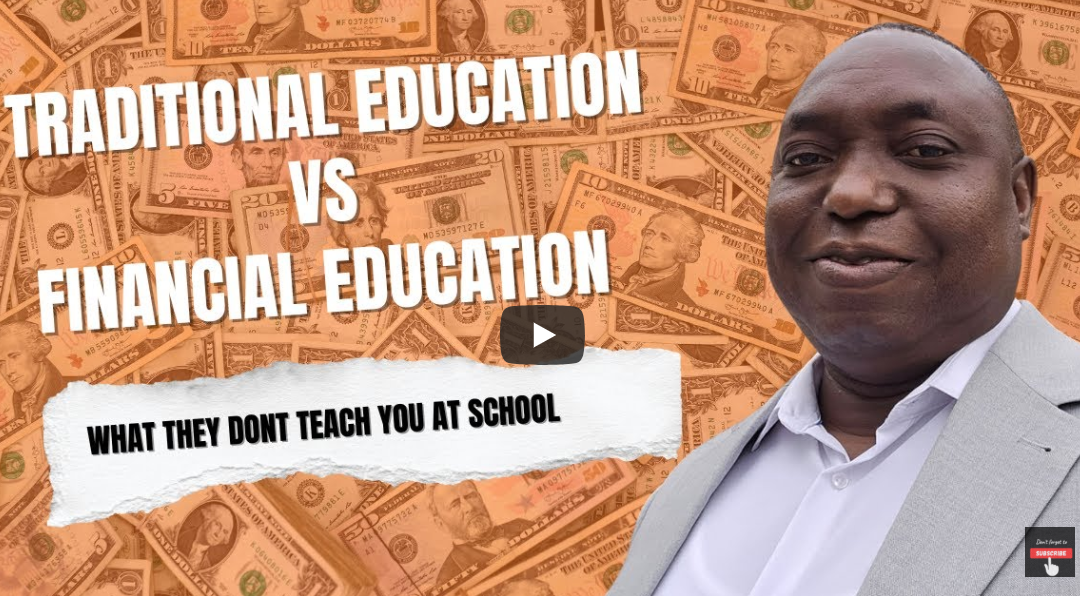
For decades, society has promoted one clear formula for success: go to school, get good grades, earn a degree, and find a good job. While traditional education provides valuable knowledge, millions of graduates around the world still struggle financially. This raises an important question:
If education is the key to success, why are so many educated people broke?
The answer lies in the difference between traditional education and financial education.
What Traditional Education Teaches Us
Traditional education focuses on:
- Academic knowledge
- Professional skills
- Certificates and degrees
- Preparing students to become employees
Schools train students to follow instructions, pass exams, and qualify for jobs. Subjects like mathematics, science, history, and literature are important—but they rarely teach how money works in real life.
You can graduate with top grades and still have no idea how to:
- Manage money
- Build assets
- Invest wisely
- Escape debt
- Create multiple income streams
The Missing Subject: Financial Education
Financial education is the study of how money is earned, managed, invested, and grown.
It answers questions such as:
- Why do some people work hard but stay poor?
- Why do the rich focus on assets instead of salaries?
- How does cash flow really work?
- What is the difference between good debt and bad debt?
Unfortunately, these lessons are rarely taught in schools.
Key Differences Between Traditional and Financial Education
1. Working for Money vs Money Working for You
Traditional education trains people to work for money.
Financial education teaches how to make money work for you through assets, investments, and systems.
2. Job Security vs Financial Freedom
Schools promote job security.
Financial education promotes financial independence—where your income is not tied only to your time.
3. Grades vs Financial Intelligence
Good grades don’t guarantee good financial decisions.
Financial intelligence determines how well you manage opportunities, risks, and money.
Why Smart People Still Struggle Financially
Many intelligent and highly educated people:
- Live paycheck to paycheck
- Accumulate debt
- Rely on one income source
- Retire with financial stress
This happens not because they lack intelligence, but because they lack financial education.
Assets and Liabilities: A Life-Changing Concept
One of the most powerful lessons in financial education is understanding the difference between assets and liabilities.
- Assets put money in your pocket
- Liabilities take money out
Most people buy liabilities thinking they are assets. Financially educated individuals focus on acquiring assets first, then enjoy luxuries later.
Why Financial Education Is More Important Than Ever
In today’s world:
- Jobs are no longer secure
- Inflation reduces purchasing power
- Technology is replacing traditional roles
Relying solely on a degree is risky. Financial education gives you:
- Control over your finances
- Better decision-making skills
- Confidence with money
- A path to long-term freedom
The Best Time to Learn Financial Education
The best time was in school.
The second-best time is now.
Financial education is not about becoming rich overnight—it’s about thinking differently, acting smarter, and building a sustainable future.